Abstract
Background Tumor-draining lymph nodes (TDLN) play a key role in inducing and promoting antitumor immunity. TDLN are commonly situated near the primary tumor and are therefore often exposed to therapeutic radiation. The impact of induction therapies comprising concurrent immunotherapy and radiation on TDLN is poorly understood. We studied the immune-modulating effects in TDLN of patients with T3-4N0-2 non-small cell lung cancer(NSCLC) using a combination of spatial transcriptomics and immunohistochemical analyses.
Methods
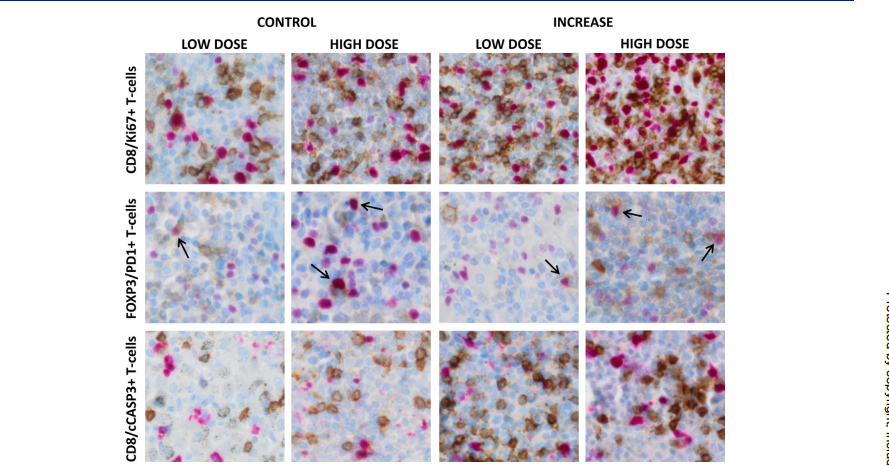
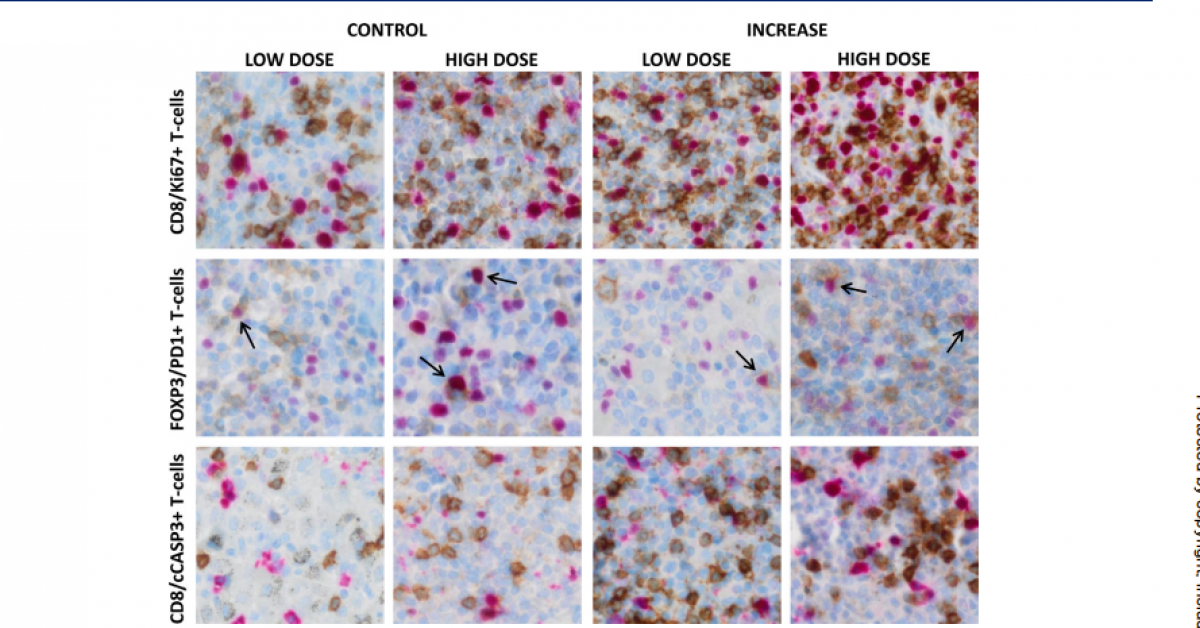
This observational cohort study collected TDLN from 2 groups: (1) patients from the INCREASE trial who were treated with neoadjuvant ipilimumab/nivolumab (IPI/NIVO) plus chemoradiotherapy (CRT) (n=25) and (2) a matched control cohort of patients with NSCLC who had neoadjuvant CRT only (n=25). TDLN were classified based on the cumulative dose of radiation received, categorized as low (≤5Gy), intermediate (20–30Gy), or high dose (50–60Gy). The TDLN were subjected to duplex immunohistochemistry of CD8/Ki67, PD-1/FOXP3, and CD8/cleaved caspase-3. On a subset of TDLN, additional GeoMx spatial transcriptomics profiling of CD8/Ki67+T cell hotspots was carried out.
Results
After addition of IPI/NIVO to CRT in the INCREASE cohort, resected TDLN showed robust type I immune responses and increased levels of CD8 and regulatory T cells in irradiated TDLN when compared with the control cohort. These immune responses were observed across all radiation dose groups with the most pronounced effects
in high dose TDLN. Significant changes in extracellular matrix and macrophage-associated gene signatures, indicating elevated fibrosis and prolonged inflammation, were observed in the TDLN with high radiation exposure, changes which were partially alleviated by immunotherapy.