Abstract
Background
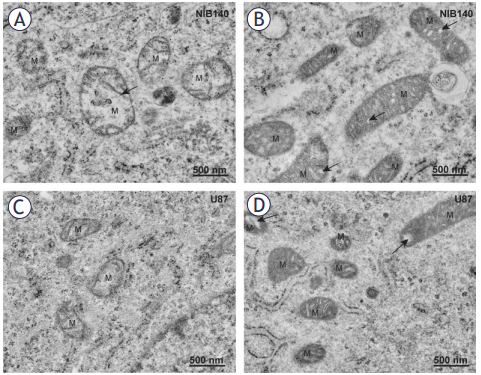
Glioblastoma stem-like cells (GSCs) contribute to the resistance of glioblastoma (GBM) tumors to standard therapies. The background of the resistance of GSCs to the chemotherapeutic agent temozolomide is not yet fully understood in the context of cellular metabolism and the role of mitochondria. The aim of this study was to perform a detailed ultrastructural characterization of the mitochondria of GSCs prior and post temozolomide exposure and to compare it to differentiated GBM cells.
Materials and methods
Patient-derived and established GBM cell lines were used for the study. The ultrastructure of the mitochondria of the examined cell lines was assessed by transmission electron microscopy. The microscopic analysis was complemented and compared by an analysis of cell metabolism using Seahorse extracellular flux analysis.
Results
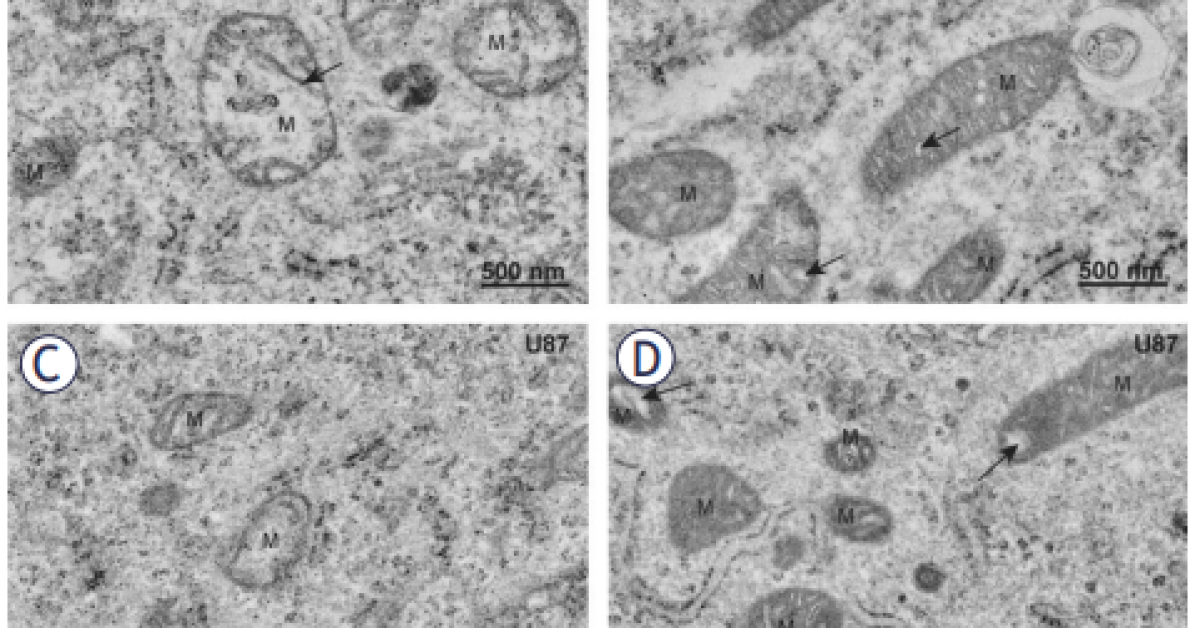
We found that the metabolic profile of GSCs is quiescent and aerobic. Their elongated mitochondria with highly organized cristae are indicating increased biogenesis and mitochondrial fusion and corresponds to a more oxidative phosphorylation (OXPHOS)-dependent metabolism. The metabolism of GSCs is dependent on OXPHOS and there are no changes in defective mitochondria fraction after the treatment with temozolomide. In contrast, differentiated GBM cells with fragmented mitochondria, which have less organized cristae, are more energetic and glycolytic. Temozolomide treatment induced ultrastructural mitochondrial damage in differentiated GBM cells.
Conclusions
We demonstrated differences in mitochondrial ultrastructure and cellular metabolism between GSCs and differentiated GBM cells in response to temozolomide, suggesting that mitochondria play an important role in the resistance of GSCs to temozolomide. This study provides a basis for further studies addressing GSC chemotherapy resistance in the context of mitochondrial structure and function.